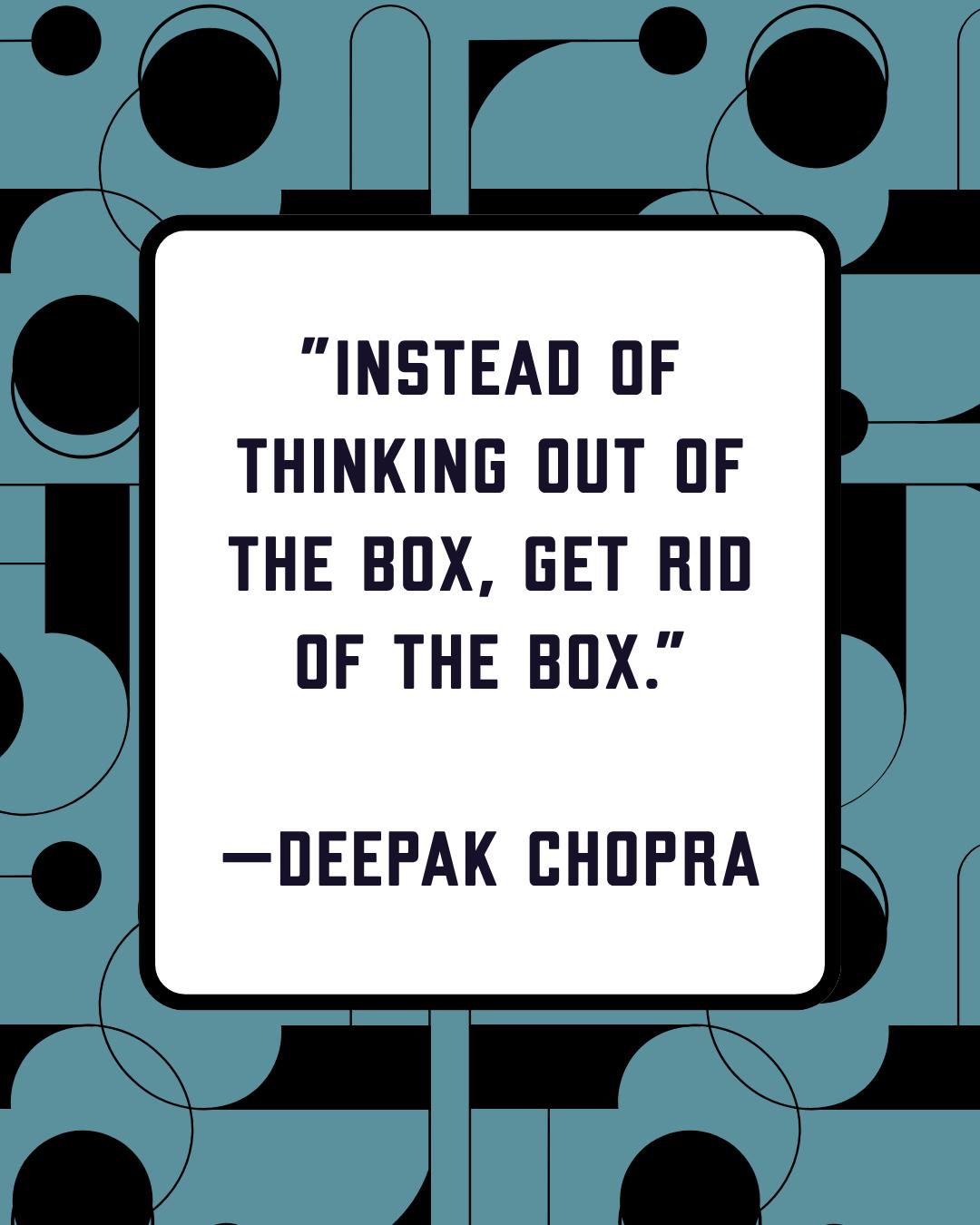
When Things Go Sideways — Part Two: The Power of the Pivot How Creative People Turn Failure Into Possibility
In Part One, I talked about the emotional side of things not going according to plan: the disappointment, the self-doubt, the perfectionism, and the sometimes spectacular ADHD experience of having one unexpected problem turn into approximately forty-seven thoughts at once.
But there is another side to this conversation that deserves just as much attention.
What if the thing that didn't work isn't the end of the story, but the beginning of a different way forward?
A setback can offer information we didn't have before, challenge us to look at a problem from another angle, or reveal possibilities we couldn't see when we were focused on the original plan. And what if the skills we have developed through creative work are exactly the ones we need when life refuses to cooperate?
We don't always think of ourselves as problem solvers. We might describe ourselves as people who make things, craft, tinker, design, or dabble in creativity. Others may identify as serious artists, designers, musicians, etc. Whatever label we use, creativity offers us the opportunity to see the familiar in a new light and imagine what else might be possible.
Psychologists recognize that creativity extends well beyond making art. In a recent Speaking of Psychology conversation from the American Psychological Association, creativity researcher Dr. Zorana Ivcevic Pringle explains how creative thinking plays a role in everyday problem solving, from finding an unexpected solution to a practical challenge to rethinking how we approach a difficult situation. She also highlights something important: creativity isn’t just about having ideas. It’s about deciding what to do with them, working through challenges, and making adjustments along the way.
Beneath every creative pursuit is something fundamental: the ability to imagine possibilities, work through challenges, adapt when things don't go as expected, and figure things out as we grow and learn our craft. Sometimes we keep working at an idea until it comes together. Other times, we recognize that a different approach might serve us better. Learning to tell the difference is part of the process.
Creative people may be practicing these problem solving skills far more oftenthn they realize. And those skills don't have to stay in the studio, workshop, or garden. They can help us navigate life's unexpected twists and turns, too.
Creativity Is Not Just Making Beautiful Things
One of the myths surrounding creativity is that creativity is primarily about artistic expression. I don’t think that’s true.
Creativity is also the ability to look at a situation and ask:
- What else could this be?
- What if I approached it from another direction?
- What happens if I change one variable?
- Is the problem actually the problem I think it is?
- What resources do I already have?
- What constraints could become useful instead of limiting?
- What happens if I stop trying to force the original solution?
That is creative thinking. It is also design thinking. And honestly, it is a pretty useful life skill.
ADHD and the Art of Changing Direction
This is where I think ADHD deserves a particularly important place in the conversation.
One of the most frustrating misconceptions about ADHD is that difficulty following through means a person does not care enough. That is not necessarily what is happening.
ADHD can affect executive functions involved in organizing, prioritizing, initiating tasks, sustaining effort, working memory, emotional regulation, and shifting attention. So imagine that you have spent weeks, or months, thinking about a project. You have researched it, imagined it, and emotionally invested in it. Your brain has built an elaborate internal model of how it is supposed to work.
Then something changes.
Suddenly the plan needs to change.
For someone without ADHD, that may already be frustrating. For someone with ADHD, the challenge can sometimes include the additional work of disengaging from the old mental model, regulating the emotional response, holding the new information in working memory, deciding what matters most, and initiating a new course of action.
That’s a lot of executive functioning. And when you are already overwhelmed, the brain may respond with:
Nope.
Not because you don’t care. Not because you are lazy. Not because you lack ambition. Sometimes there are simply too many things competing for your attention at once. That is why the phrase “just pivot” can be almost comically unhelpful. It’s like telling someone whose desk is covered in 1000 pieces of a puzzle, “Have you considered simply finishing it?” Thank you, Captain Obvious.
The more useful question is:
How do we make the pivot manageable?
A Pivot Does Not Have to Be Dramatic
Sometimes we hear the word pivot and imagine a complete reinvention. Quit the job! Move across the country! Start a company! Change careers! Become a *fill in the blank*! Start a farm, go off grid! Okay, maybe the farm is just me again. But a pivot can be much smaller.
It can mean changing the deadline, changing the order, changing the material, changing the audience, changing the process, asking for help, removing one unnecessary step, breaking one enormous task into five smaller ones, changing the environment, or trying the experiment before committing to the whole project.
Sometimes a pivot is simply saying:
“I’m going to do this differently.”
And that is enough. Other times it requires a bit more.
The Pivot Map
When something does not work, try approaching it like a design problem instead of a character judgment.
Take a piece of paper and divide it into four sections. What I Wanted
What was I hoping would happen?
What mattered about that outcome?
What Actually Happened
What are the facts? Not the interpretation. Not the shame story. The facts.
What I Learned
What information, skill, feedback, or insight did I gain?
What assumption turned out to be wrong?
What do I know now that I did not know before?
What I Can Try Next
What is one realistic experiment? Just one.
For an ADHD brain, I would make this even more concrete:
What is the smallest visible action I can take within the next 10–20 minutes?
Not because everything must be completed in twenty minutes, but because starting creates movement, and movement creates information.
Get the Problem Out Of Your Head
This is one of the most useful principles I would borrow from ADHD coaching. If your brain is overwhelmed, stop asking it to hold everything. Put it somewhere.
You can:
- Write it down.
- Draw it.
- Make a mind map.
- Use sticky notes.
- Create a visual board.
- Record a voice memo.
- Make a checklist.
- Set timers.
- Put appointments and deadlines on a calendar.
- Tell another person what you are trying to do.
- Create a visible “next step” rather than holding the entire project in your head.
Externalizing information is not a sign that you are incapable of managing your life. It is a way of reducing the amount of information your working memory has to carry.
Barkley’s Taking Charge of Adult ADHD specifically includes strategies around externalizing key information and breaking problems into manageable pieces. And honestly, this is where creativity and ADHD can make a beautiful partnership.
If your brain is having trouble organizing the invisible, make the invisible visible.
- Draw it.
- Map it.
- Build it.
- Color-code it.
- Move the pieces around.
- Turn the problem into something you can see.
Sometimes the act of making the problem tangible changes our relationship with it.
Ask Better Questions
Sometimes we do not need more motivation. We need a better question.
Instead of: Why can’t I make this work?
Try: What is this situation asking me to reconsider?
Instead of: Why am I so bad at this?
Try: What skill or information am I missing?
Instead of: Why does everyone else seem to have figured this out?
Try: What can I learn from someone who has already navigated something similar?
Instead of: Should I give up?
Try: What would changing the approach look like? And perhaps one of my favorites:
What would I try if I knew that trying again did not mean repeating the same thing? Because it doesn’t. Trying again can mean trying differently.
Generate Ridiculous Ideas
This is one of my favorite parts. Give yourself permission to come up with ideas that are impractical, weird, excessive, impossible, or mildly ridiculous. Creative brainstorming works better when we temporarily suspend the need to evaluate every idea as soon as it appears.
Try asking:
- What would I do if there were no rules?
- What would I try if money, time, or other limitations were temporarily removed?
- What is the most ridiculous possible solution?
- Is there a tiny, realistic version of that ridiculous idea?
- What would I do if I were not worried about what anyone else thought?
This can be particularly useful when perfectionism and ADHD combine.
Perfectionism says, That idea isn’t good enough. ADHD says, Wait! What about this other idea? And this one? And this one? Oh! I just remembered something else! And now we have 37 tabs open.
Instead of trying to eliminate that creative energy, give it a container.
Brainstorm first. Evaluate second.
That distinction can be incredibly freeing.
Prototype Instead of Overthinking
This might be my favorite creative life lesson: Do not think yourself into certainty when you can test your way into information.
Make a tiny version. Try the conversation. Sketch the idea. Build the rough model. Write the terrible first paragraph. Make the sample. Apply for the thing. Ask the question. Try the new strategy for one week.
IDEO’s design philosophy emphasizes prototyping as a way to learn through making rather than trying to solve everything intellectually before beginning. Early prototypes can be simple precisely because their purpose is to generate information and make revision easier.
That principle applies beautifully to life. You don’t need to build the whole bridge before discovering whether the first few steps are going in the right direction.
For ADHD, this can also reduce the activation energy required to begin.
Instead of: “I need to redesign my entire business.”
Try: “I am going to sketch three possible versions for twenty minutes.”
Instead of: “I need to figure out my career.”
Try: “I am going to research one possibility.”
Instead of: “I need to fix this project.”
Try: “I am going to identify the one part that is actually preventing progress.”
Small does not mean insignificant. Small means doable.
Watch the Emotional Spiral
Here is another ADHD-specific consideration that deserves compassion. When something goes wrong, the emotional response can sometimes become bigger than the original problem. Research has found meaningful associations between ADHD symptoms and emotional dysregulation, including emotional lability and negative emotional responses.
That does not mean every strong emotion is caused by ADHD. It does mean that for many people with ADHD, emotional regulation can be part of the challenge. And once we are emotionally flooded, our ability to problem-solve may become much harder.
Before asking yourself, “What should I do?” it can be helpful to pause and consider, “Am I regulated enough to decide what to do?” When we're overwhelmed, frustrated, or emotionally flooded, it can be harder to access the creative and analytical abilities we need to work through a problem. If you're not in the right headspace to make a decision, the next step doesn't have to be productivity. It might be taking a walk, drinking some water, eating something, stepping away from the screen, taking a few slow breaths, talking to someone, writing down what you're feeling, or sleeping on it. The goal isn't to avoid the problem; it's to give yourself the space and support you need to approach it with a clearer mind.
You Don’t Have to Earn Compassion by Succeeding
This may be one of the most important parts of the process. If you've spent years being told, directly or indirectly, that you're inconsistent, scattered, too much, not enough, not living up to your potential, or simply not trying hard enough, setbacks can carry a lot of emotional baggage. A project that doesn't work out may feel like much more than one disappointing experience. Instead, it can seem to confirm an old, familiar story: See? There it is again. I knew I couldn't do this. I always screw things up. Everyone else seems to manage just fine.
This is where self compassion becomes an important part of problem solving. It isn't an indulgence or an excuse to give up; it's a tool that helps us remain open to learning. We need enough emotional safety to approach a challenge with curiosity, enough curiosity to experiment with different possibilities, and enough willingness to learn from those experiments to adapt when something isn't working. Over time, these steps create a cycle of growth. Harsh self criticism can interrupt that process by making us afraid to try again, while self compassion helps keep the door open to new ideas, different approaches, and the possibility that we can do things differently next time.
The Goal Can Stay Even When the Route Changes
We often imagine success as a straight line: start here, work hard, keep moving forward, and eventually arrive. But creative lives rarely follow such a tidy path. They look more like sketches, arrows, crossed out ideas, unexpected detours, things taped together, things taken apart, and discoveries we never could have planned. Sometimes the things that seem like mistakes turn out to be the missing pieces we needed all along. The creative process reminds us that a path doesn’t have to be linear to be meaningful. Austin Kleon’s writing about creativity offers a similar lesson: making more gives us more opportunities to experiment, learn, and improve. That idea extends far beyond pottery or painting. Sometimes we need to make more attempts, have more conversations, sketch more ideas, ask more questions, try different versions, and give ourselves permission to experiment with life itself. Not because we’re failing at life, but because we’re learning how to live it.
Your Creative Brain May Already Know the Way
This may be the biggest thing I want to leave you with. If you’ve spent years making things, solving problems, experimenting, designing, repairing, reinventing, improvising, or figuring out how to make something work with the materials you actually have rather than the ones you wish you had, you’ve been practicing resilience. You’ve been developing adaptability, critical thinking, and resourcefulness. You’ve learned to look at something that isn’t working and consider another possibility. Sometimes the most useful thing you can say to yourself is, “Okay. Let’s try something else.”
If you have ADHD, you may also have spent years developing unconventional ways of getting things done because the systems around you didn’t always fit the way your brain works. That can be exhausting, especially when you’ve interpreted the extra effort as evidence that something is wrong with you. But the strategies you’ve developed along the way may also reflect creativity, flexibility, and an ability to find solutions when the obvious route isn’t available. Those strengths don’t erase the challenges, but they deserve recognition, too.
So, the next time life hands you a beautifully inconvenient plot twist, pause before deciding that something has gone wrong. Maybe it has. Or perhaps you’ve simply reached the point where the original plan ends, and a new possibility hasn’t revealed itself yet.
Instead of beating yourself up for not knowing what comes next, try getting curious. Look around. Ask a better question. Write down the thoughts competing for your attention so you can examine them more clearly. Separate the information you know from the assumptions you’re making, and consider whether F.E.A.R. (False Evidence Appearing Real) or an old story about your limitations is making it harder to see the situation objectively. You don’t have to figure everything out alone, either. Ask for support when you need it, and give yourself permission to explore more than one possibility before deciding what to do.
You don’t need to know the entire route to take the next step. Sometimes you just need to pause, look at what you’ve learned, and see where it leads you.
A Few ADHD-Friendly Practices to Take With You
When you are overwhelmed by a failed plan, try this sequence:
STOP:Don’t make the setback mean anything about your worth yet.
GROUND:Give your nervous system a chance to settle.
EXTERNALIZE:Get the thoughts out of your head and onto paper, a screen, a whiteboard, or whatever works.
SEPARATE FACTS FROM STORIES:What actually happened? What are you assuming it means?
SHRINK THE PROBLEM:What is the smallest piece you can work on?
ASK A BETTER QUESTION:What are you actually trying to accomplish?
EXPERIMENT:What can you test rather than endlessly think about?
PIVOT:Change the strategy, not necessarily the goal.
REPEAT:Creativity is rarely one brilliant idea. It is often a conversation between an idea and reality. And they both get to be thoughtfully considered.
There is power in coming back to the present moment.
Give yourself permission to breathe, pause, and begin from a place of steadiness rather than chaos. The next time life throws you a crazy plot twist, take a few deep breaths and give yourself some grace for not immediately knowing what to do. When we feel threatened or overwhelmed, our survival systems can take the driver’s seat, making it harder to access the parts of our brain responsible for thoughtful decision-making, perspective, and problem-solving. A pause gives your nervous system a chance to settle so you can create a little space between what happened and how you respond. Your next step then has a chance to become a choice rather than a reaction. The pause creates space between the experience and the response—and sometimes that small space is where our power lives.
Vichelle
Next...
PART THREE:
Getting through the plot twist isn’t the end of the story. What if the experiences that challenge us can also teach us how to better understand ourselves, build self-trust, and develop tools that make the next challenge a little easier? In Part Three, we’ll look at resilience, acceptance, and the process of turning hard-earned experience into lasting wisdom—keeping the lesson without carrying the shame.
Works Cited
American Psychological Association. “Speaking of Psychology: Why It Takes Courage to Be Creative, with Zorana Ivcevic Pringle, PhD.” American Psychological Association, April 2026.
Barkley, Russell A., with Christine M. Benton. Taking Charge of Adult ADHD: Proven Strategies to Succeed at Work, at Home, and in Relationships. 2nd ed., Guilford Press, 2021.
Brown, Brené. The Gifts of Imperfection. Hazelden, 2010.
Gilbert, Elizabeth. Big Magic: Creative Living Beyond Fear. Riverhead Books, 2015.
Kelley, Tom, and David Kelley. Creative Confidence: Unleashing the Creative Potential Within Us All. Crown Business, 2013.
Neff, Kristin. Self-Compassion: The Proven Power of Being Kind to Yourself. William Morrow, 2011.